Reducing Overlapping Bookings by Understanding User Triggers
A 1.5-year, full-funnel UX strategy that turned research into real behavior change across search, booking, and post-booking.
At a Glance
- Timeline: 1.5 years
- Scope: Full-funnel UX strategy to reduce overlapping bookings across search, booking, and post-booking
- Role: Solo designer on a cross-functional team, working closely with product managers and researchers
- Key challenge: Change deeply ingrained user behavior driven by fear and uncertainty
Outcome
What I delivered:
A research-backed strategy and set of designed experiences across the booking funnel that helped users make decisions sooner and with confidence, reducing overlapping bookings while addressing the stress and uncertainty that drove the behavior.
Core deliverables:
- UX audit and journey map identifying gaps and opportunities across the full funnel
- Two core personas (Keepers and Replacers) with distinct pain points and behavioral triggers
- Strategic feature designs including booking reminders, comparison tools, and reassurance messaging
- Research collaboration including co-running interviews each quarter, conducting additional usability tests, and helping synthesize findings in collaboration with the full team
- Iterative prototypes validated through multiple rounds of user and A/B testing each quarter
Impact:
By focusing our roadmap on what we understood about user behavior, we were able to reduce overlapping bookings both before they happened and after, which had been the goal from the start. Our experimentation success rate was a high average of 20–25% per quarter, which meant we were getting better experiences to users sooner. Feature adoption grew with each iteration, with usage increasing from 50% to 80% as we refined our work. We also brought teams together who were all working on related parts of the journey but hadn't always been thinking about it as one connected experience.
The result was that we could ship with more confidence, knowing the work was based on real understanding of user pain points and triggers. This kept us from not just optimizing one metric at the expense of another.
Context
Overlapping bookings, reservations made for the same dates whether fully or partially, were damaging to everyone involved. The business and partners risked having cancellations not rebooked, blocked availability kept other travelers from making the bookings they needed, and the users themselves were often the most affected, left stressed about making the right choice while juggling multiple reservations they didn't feel ready to let go of.
Challenge
The core problem: Most overlapping bookings were intentional and rooted in stress and uncertainty. Users were uncertain about their travel details or needed time to compare accommodations without missing out, and booking multiple options was the only way they knew how to manage that uncertainty. This was especially complex because overlapping bookings were influenced by decisions made across search, booking, and post-booking. A lot of the work happening in those areas was focused on conversion and being done by separate teams, which meant improvements in one part of the funnel could unintentionally make the problem worse at another point.
The approach: Before taking large experimental swings, we needed to set a behavioral foundation and make sure we had consistent coverage across the full journey so that we could solve the problem as a whole and serve up the right solution for each part of the funnel.
My Role
I was the sole designer on a small cross-functional team for 1.5 years, which meant I was closely involved in nearly every part of the process. I worked with our product manager and researcher to connect research findings to product strategy and help build a roadmap focused on strategic behavior change.
Because of my research background, I was able to work alongside our researcher each quarter to run user interviews, and I also conducted additional usability tests as needed. I helped compile and analyze findings to uncover core personas and their triggers, and that closeness to the research shaped how I thought about every design decision.
Approach
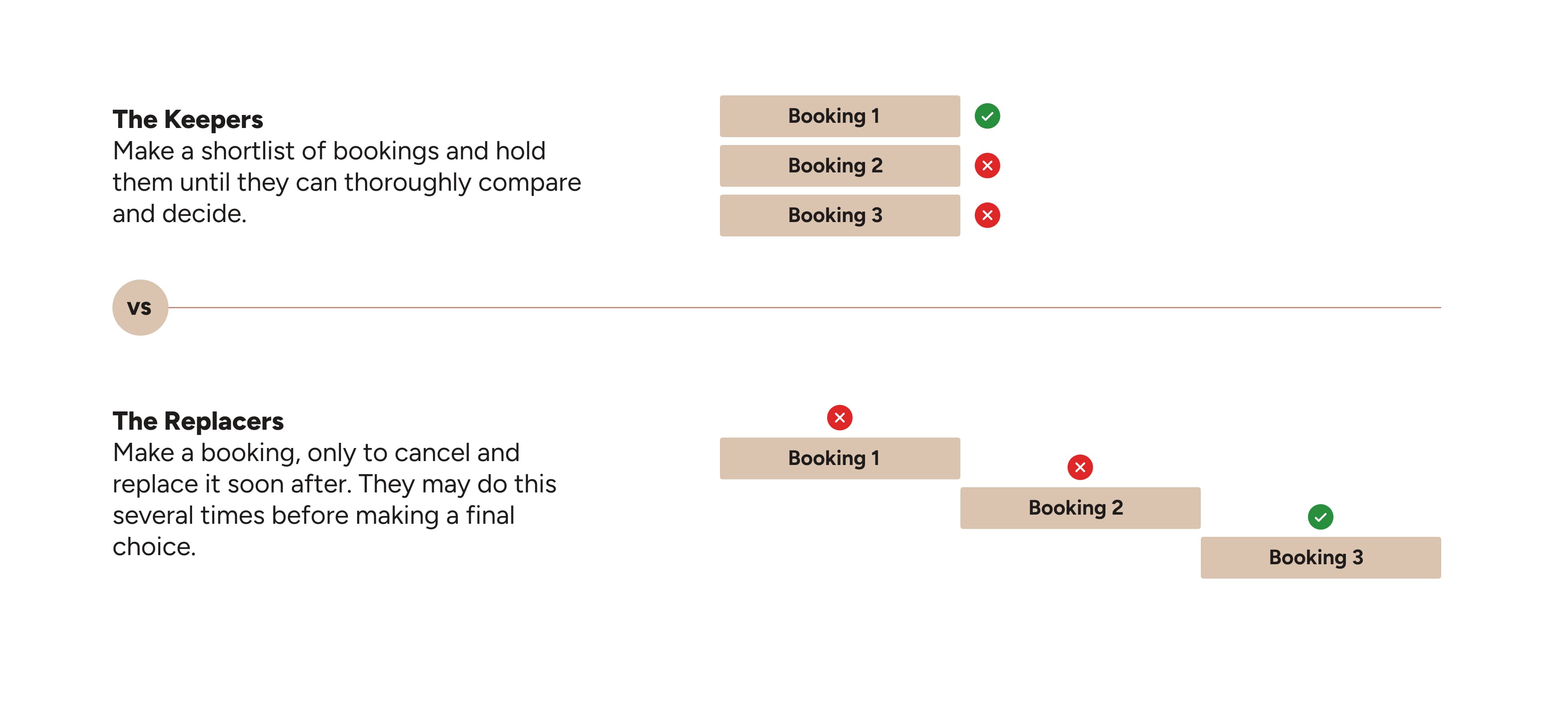
Research-driven persona discovery. I worked closely with our researcher each quarter to run user interviews, analyze behaviors and pain points, and uncover two core personas, Keepers and Replacers, each needing a different approach.
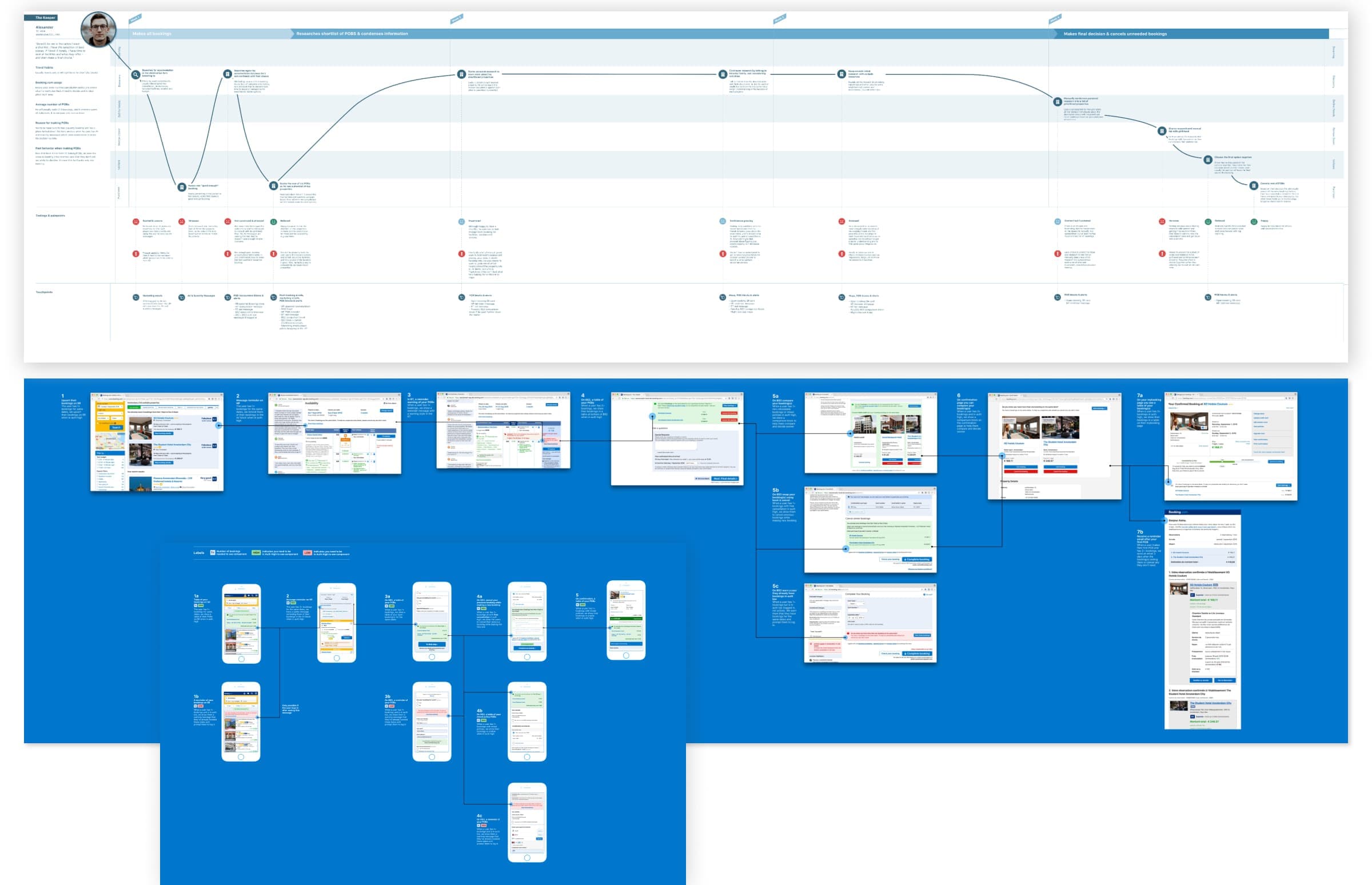
Journey mapping to find gaps. In the first quarter, I completed a UX audit and mapped existing touchpoints to find where we had gaps and where we had opportunities. This became a living document that shaped our strategy and helped us build a complete funnel tailored to alleviating our personas' biggest fears.
Cross-functional involvement in research. As a cross-functional team, we encouraged everyone to participate in note-taking during user tests so that the whole team could see results firsthand and feel more connected to the problems we were solving together.
Behavioral strategy rather than feature optimization. We built our roadmap around the specific behaviors we wanted to change, which was a real shift from the default of optimizing individual features for conversion.
How I Contributed
Helped discover two core personas through research synthesis: Keepers, who make shortlists and hold bookings until they can compare, and Replacers, who book, cancel, and replace multiple times before deciding. Understanding this distinction changed our entire approach because what would help one group was completely different from what the other group needed.
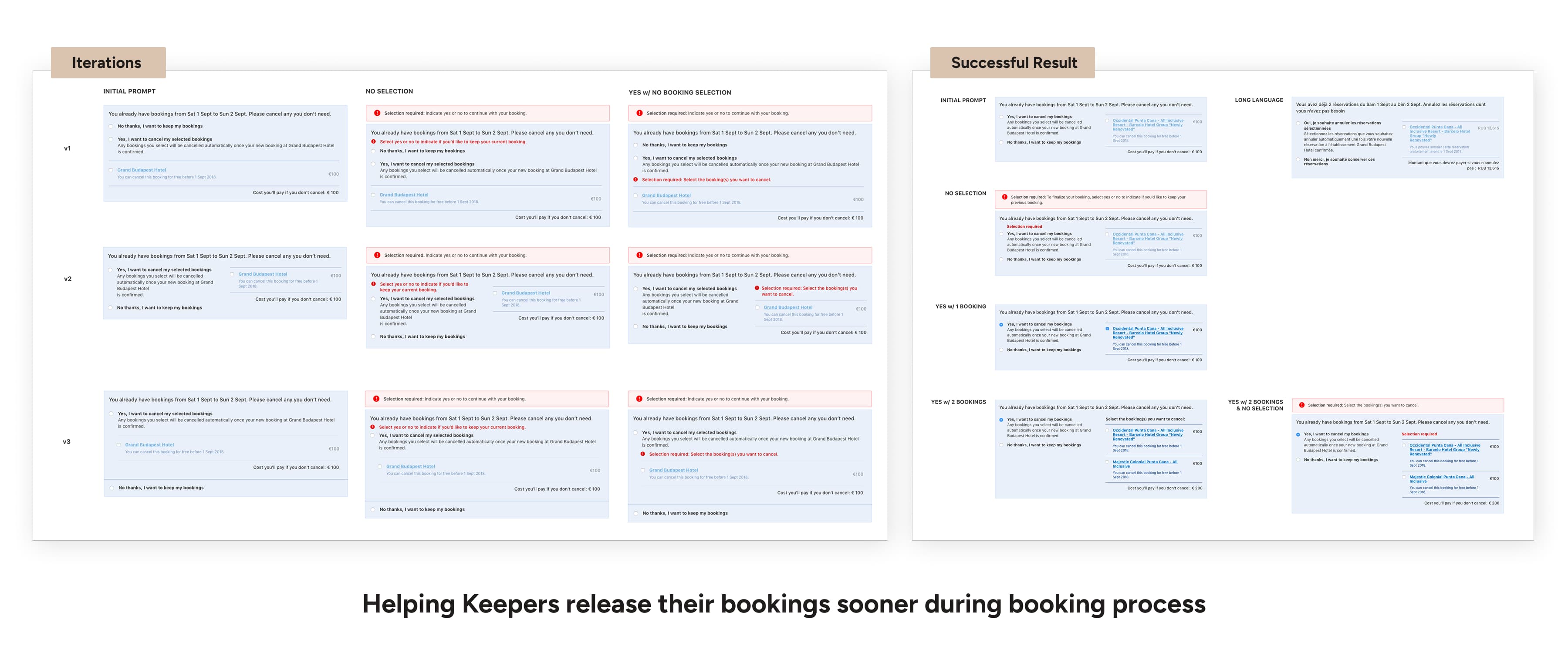
Designed a strategic flow for Keepers to help them remember, compare, and cancel sooner. The insight behind this was that Keepers weren't avoiding a decision out of laziness; they were holding on because they hadn't yet felt confident enough to cancel. So instead of just nudging them to cancel, we focused on helping them feel ready to decide, and that reframing had a great impact on how users responded.
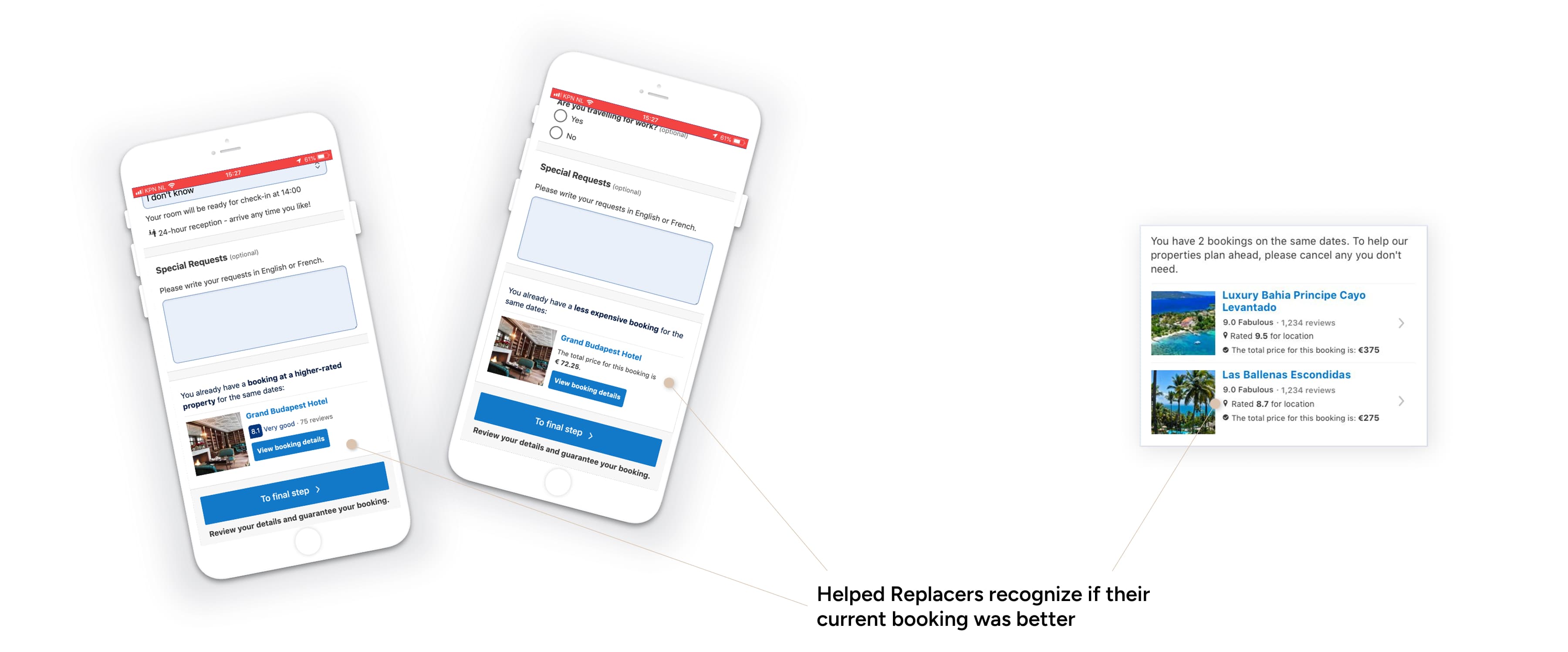
Created reassurance messaging for Replacers to address their fear that their first booking wasn't good enough, which was the underlying driver behind their cycle of booking, cancelling, and rebooking that we kept seeing in interviews.
Built cross-team alignment by working with product managers and designers from related teams to implement features that fit into their visions while supporting our behavioral goals. This collaboration was important because the areas we needed to touch belonged to other teams, and the work wouldn't have succeeded without that shared understanding.
Established iterative design and testing that involved the full team in synthesis, which led to higher adoption and better results with each round because the whole team understood why we were making the choices we were making. Every team member became an advocate.
Key Questions
- Where does uncertainty begin, and how can we give a user more confidence?
- How can we reduce stress without removing flexibility?
- What helps users decide sooner rather than later?
- How do we chip away at this problem while supporting conversion goals?
Result
Because we took the time to understand user behavior first, we were able to design with confidence and data behind our decisions. Features launched with strong adoption, including a 50% increase in usage for booking reminders after initial launch, growing to 80% after iteration. The preventative features we implemented on search results reduced overlapping bookings by 3% on desktop and 7% on mobile, with 1 in 4 users directly interacting with pinned bookings.
But what I'm most proud of is that we created a team culture of understanding user behavior first, which genuinely changed how we approached all the work that followed. The research both informed individual features and intrinsically shaped how the team thought about problems.
Interested in working together? See how I can help.