Adding Complexity to a Signup Flow Without Sacrificing Trust or Conversion
Redesigning a signup experience to support subscriber growth and an expanding product offering, while maintaining brand trust and strong conversion.
At a Glance
- Timeline: 3 phases over 12 months (initial phase: 7 weeks)
- Scope: Mobile and desktop signup redesign with modular architecture for future expansion
- Role: Senior UX consultant leading strategy, research, and design across product, creative, marketing, and engineering teams
- Key challenge: Tight deadlines, needed to add complexity without hurting conversion, and needed to scale to support multiple product releases over several months
Outcome
What I delivered:
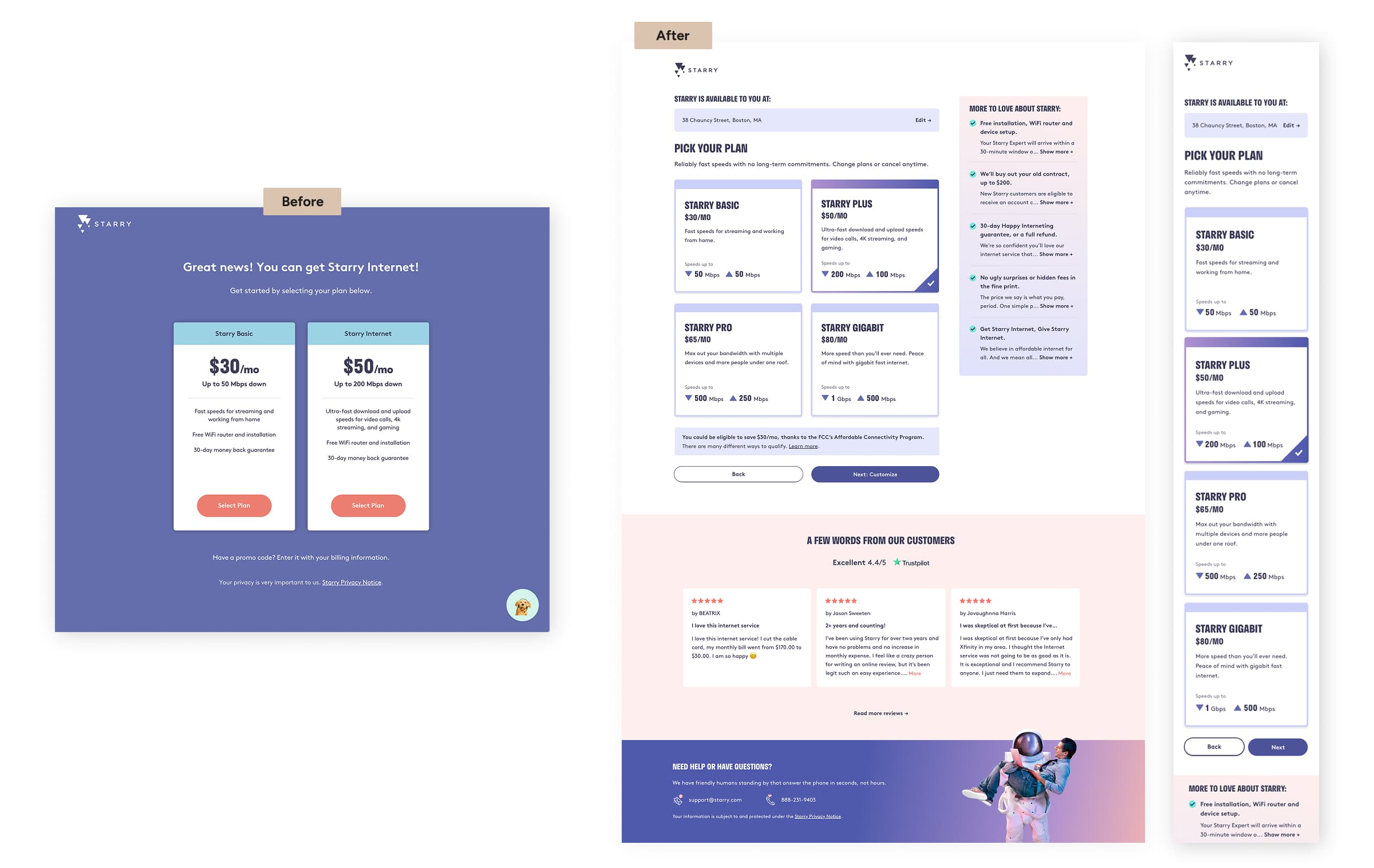
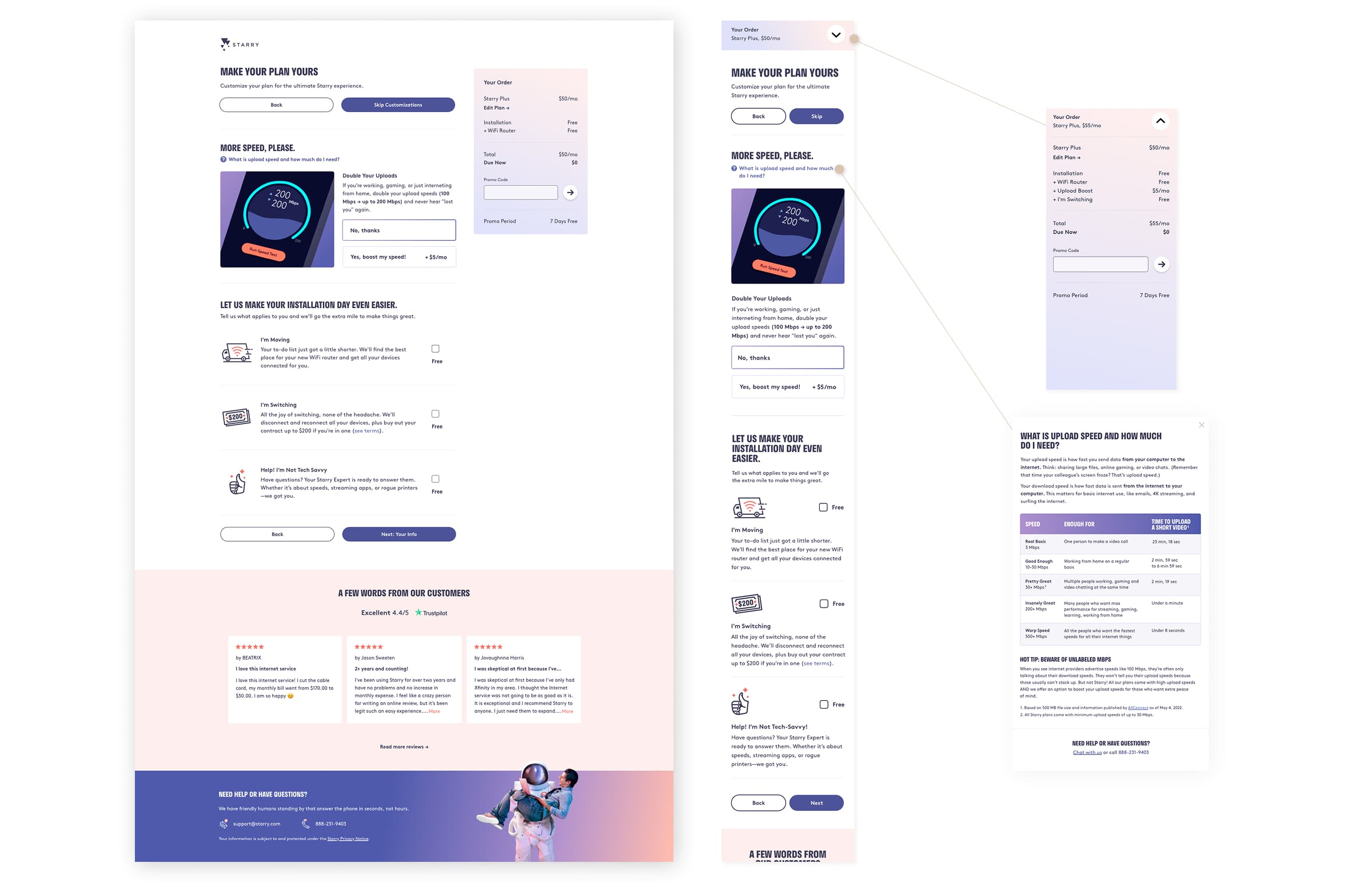
A complete mobile and desktop signup redesign with a modular architecture that could accommodate future business models, from plan customization to paid add-ons, without compromising brand trust or conversion.
Core deliverables:
- Information architecture that allowed engineering to start building while UI was still in development
- Usability testing framework with 10+ participants across 3 rounds to validate direction before executive review
- Wireframes and prototypes for mobile and desktop signup flows
- Brand positioning framework defining how to introduce paid features transparently, later adopted across marketing and product
- Implementation documentation and A/B testing plan for post-launch optimization
Impact:
The work launched on schedule and passed C-suite review with minimal revisions. Post-launch monitoring showed the redesigned flow increased their already strong conversion performance and customer satisfaction scores despite adding considerable complexity, and that had been a real concern going in.
The foundation we built supported two additional project phases over the following year, and the testing approach I designed became the company's standard for product launches.
Context
Starry had built a signup experience that worked well, but it was originally designed for customer service reps signing people up in the field, not for the range of plans, add-ons, and customer segments the company was growing into. They needed to evolve it to support that growth while preserving the brand trust, clarity and ease of use that had earned them strong customer satisfaction.
Challenge
The core problem: The existing flow was solid, but it couldn't accommodate what was coming. Any changes needed to handle increased complexity, things like new plans, paid add-ons, and hardware options, without adding friction, confusing customers, or hurting conversion.
The constraints: I was brought in as the senior UX consultant to lead the effort, and the initial project had a 7-week deadline to redesign the core experience and establish a foundation for future expansion. That foundation then supported two additional phases over the following year: research into the onboarding and customization experience, followed by a framework for introducing paid add-ons without feeling pushy or out of character for a brand that had deliberately set itself apart from the sales-heavy approach of other providers.
My Role
I worked as a senior UX consultant embedded with product, creative, marketing, and engineering teams across three phases spanning roughly a year. I partnered closely with the creative director from the start as my primary sparring partner on strategy and direction, and I led UX strategy, research, information architecture, and wireframing. Visual designers on the creative team then brought those wireframes to full fidelity, which meant I could stay focused on structure, research, and making sure what we were building actually held up under testing.
I also designed the project structure itself to keep cross-functional teams aligned and moving in parallel under tight deadlines. A core part of my role was bringing stakeholders in at the right moments to maintain momentum without sacrificing buy-in.
Approach
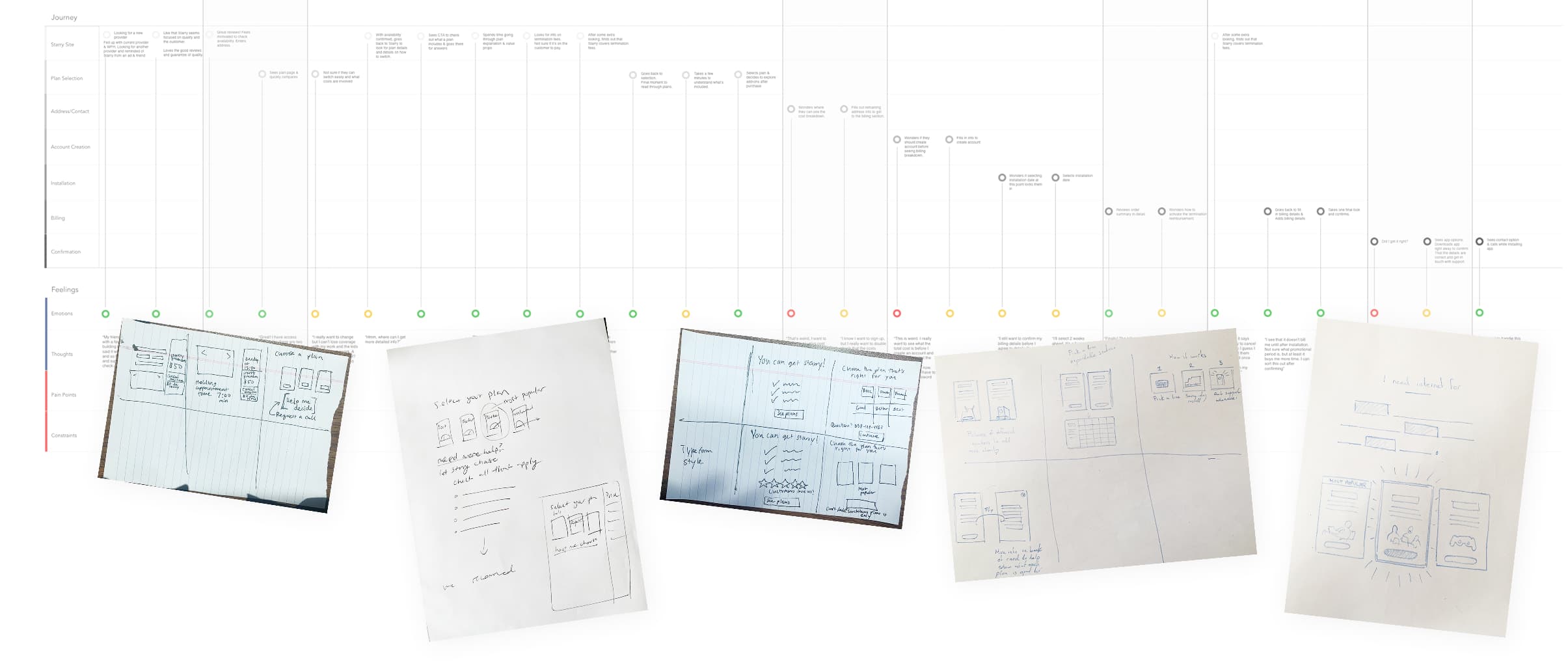
Information architecture first. By starting with IA and research frameworks before jumping into design, we gave teams the ability to work in parallel and make decisions with confidence instead of waiting on each other.
Research-led iteration. Multiple rounds of usability testing with real users shaped the work throughout the process, and we iterated based on evidence rather than assumptions.
Strategic stakeholder timing. The creative director and I aligned early on direction, which meant that when we brought executives in we had something concrete and considered to show. That rhythm of aligning first, then presenting, kept us moving without getting stuck in endless review cycles.
Reusable systems. Testing frameworks, brand guidelines, and modular design patterns that could support future work without needing to start from scratch.
How I Contributed
Designed a research-led workflow that let engineering begin implementation while visual design was still being finalized. By delivering the information architecture and wireframes early, the creative team had a clear foundation to build from and engineering didn't have to wait on final visuals to start building, which is what allowed us to compress the timeline without sacrificing quality.
Built a brand positioning framework that defined how to introduce paid features transparently, which was later adopted across marketing and product strategy.
Managed stakeholder involvement strategically to secure buy-in with minimal revisions.
Led discovery work that helped the team refine and combine ideas into stronger directions, informing pricing strategy, messaging, and product roadmap decisions.
Established a usability testing approach that became the company's standard process for product launches.
What Followed
Building on the initial foundation, I continued working with the team through two more phases: research into how the onboarding and customization experience could improve, and then designing a framework for introducing paid add-ons that felt consistent with a brand that had always prioritized honesty over hard selling. All three phases launched successfully, and we built a solid team process centered on user experience that could be carried forward to other projects.
Interested in working together? See how I can help.